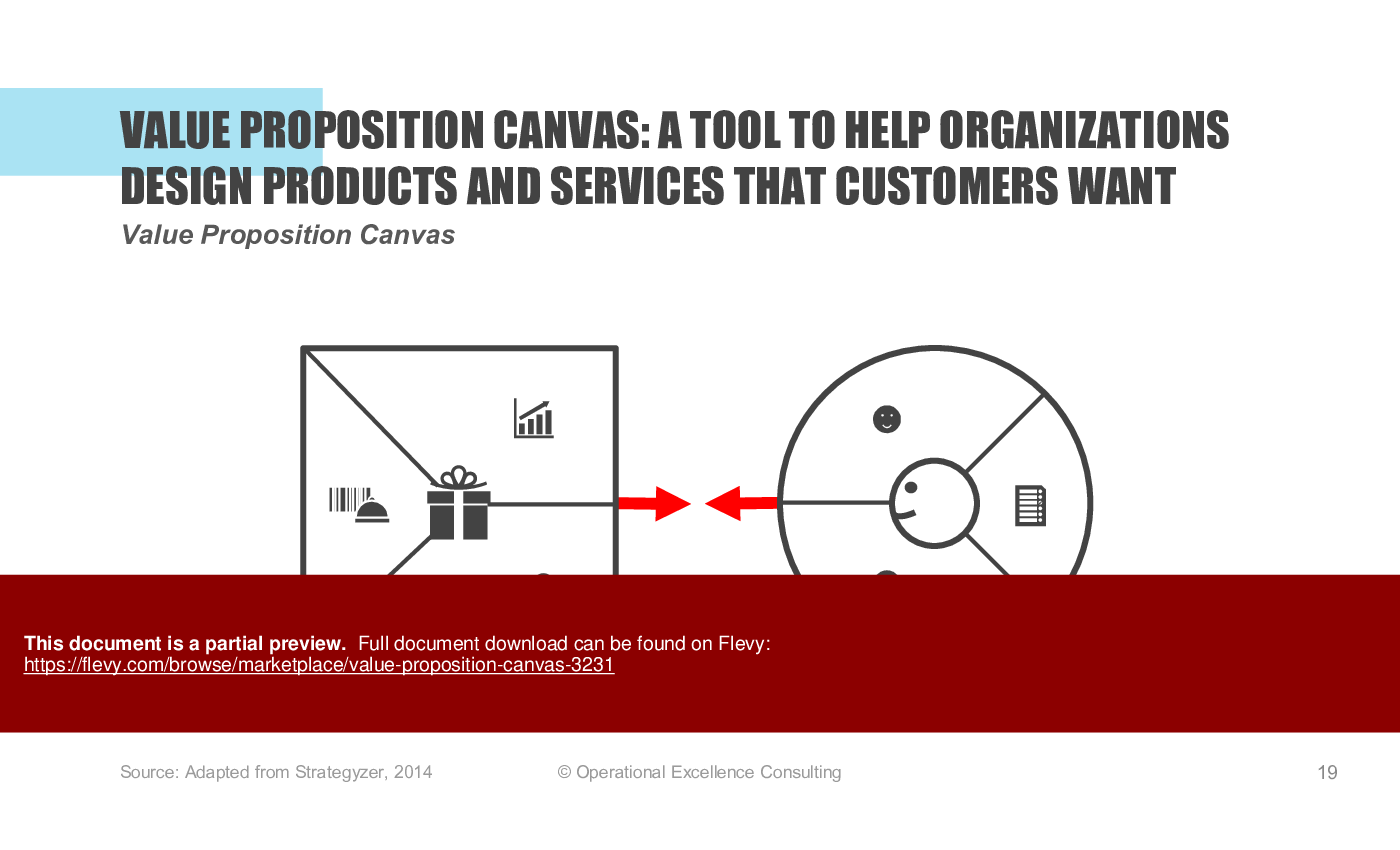

The Value Proposition Canvas is a tool developed by Strategyzer which can be applied to understand your customers' needs, and design products and services they want.

Understanding your value proposition for each customer segment is a fundamental part of a customer-centric organization and the first step in beginning a customer-centricity initiative.
The Value Proposition Canvas consists of two key components that are used to invent and improve value propositions. The first component, the Customer Profile, is a useful tool to gather insights of customers' jobs, pains and gains. The second component, the Value Proposition Map, is used to define products and services to alleviate extreme pains and create essential gains that customers care about.
As a visual tool, the Value Proposition Canvas serves as a shared language and can be integrated into your business model to improve customer satisfaction and drive growth.
You can use this presentation to run a half-day or one-day workshop to facilitate participants to improve existing value propositions or develop new ones.
||||||||||||||||||||||||||||||||||||||||||||||||||||||||||||||||||||||||||||||||||||||||||||||||||||||||||||||||||||||||||||||||||||||||||||||||||||||
This training package includes:
1. Value Proposition Canvas training presentation (PowerPoint format, in 16:9 widescreen)
2. Value Proposition Canvas templates (PowerPoint format)
3. Value Proposition Canvas poster (PDF format, in color and monochrome, printable in A3/A4 size)
||||||||||||||||||||||||||||||||||||||||||||||||||||||||||||||||||||||||||||||||||||||||||||||||||||||||||||||||||||||||||||||||||||||||||||||||||||||
LEARNING OBJECTIVES
1. Acquire knowledge of the Value Proposition Canvas to create value that customers want.
2. Apply the Value Proposition Canvas to invent and improve value propositions based on specific customer segments.
3. Apply the Customer Profile tool to gather insights of customers' jobs, pains and gains.
4. Apply the Value Map tool to alleviate extreme pains and create essential gains that customers care about.
5. Put the Value Proposition Canvas to work to create a shared language of value creation.
CONTENTS
1. Introduction
• What is Value Proposition?
• What is a Value Proposition Canvas?
• Benefits of Using a Value Proposition Canvas
2. Basics of Design Thinking
• Principles of Design Thinking
• 5 Phases of Design Thinking
3. Value Proposition Design Process
• Value Proposition Design Process
• An Integrated Suite of Tools
• Online Strategyzer Tools
4. Value Proposition Canvas
• Framework of the Value Proposition Canvas
• Examples – Tesla, Toyota, Adidas & Home Dialysis Machine
5. Customer Profile
• Customer Segment Profile
• Customer Jobs
• Customer Pains
• Customer Gains
• Steps to Create an Actionable Customer Profile
6. Value Map
• Value (Proposition) Map
• Products & Services
• Pain Relievers
• Gain Creators
• Steps to Create a Value Map
7. Fit: Aligning Customer Needs and Value
• Fit Overview
• Test Your Assumptions with the Customer
• Find the Best Fit
8. Best Practices
• Common Mapping Mistakes – Customer Profile
• Common Mapping Mistakes – Value Map
• Critical Success Factors
This presentation includes real-world examples from leading companies like Tesla, Toyota, and Adidas, showcasing successful value propositions. It also highlights common pitfalls and best practices, ensuring your team avoids costly mistakes.
Got a question about the product? Email us at support@flevy.com or ask the author directly by using the "Ask the Author a Question" form. If you cannot view the preview above this document description, go here to view the large preview instead.
Executive Summary
The Value Proposition Canvas presentation is a strategic tool designed to help organizations understand customer needs and create products and services that resonate with them. Developed by Alex Osterwalder at Strategyzer, this framework enables teams to visualize customer profiles and value propositions effectively. By utilizing this canvas, organizations can enhance customer-centricity, reduce product failures, and improve overall market fit. This presentation is ideal for workshops aimed at fostering a shared language around value creation and innovation.
Who This Is For and When to Use
• Product Managers seeking to align offerings with customer needs
• Marketing Teams aiming to refine messaging and positioning
• Business Analysts focused on customer insights and market research
• Consultants facilitating workshops on value proposition design
Best-fit moments to use this deck:
• During product development phases to ensure alignment with customer expectations
• In strategic planning sessions to identify and prioritize customer needs
• For training workshops aimed at enhancing team understanding of customer-centric design
Learning Objectives
• Acquire knowledge of the Value Proposition Canvas to create value that customers want
• Apply the Value Proposition Canvas to invent and improve value propositions
• Establish a shared language of value creation across teams
• Identify customer jobs, pains, and gains to inform product development
• Design effective pain relievers and gain creators that resonate with target segments
Table of Contents
• Introduction to the Value Proposition Canvas (page 3)
• Basics of Design Thinking (page 5)
• Value Proposition Design Process (page 41)
• Value Proposition Canvas (page 45)
• Customer Segment Profile (page 77)
• Value Map (page 101)
• Finding the Fit (page 119)
• Best Practices (page 131)
Primary Topics Covered
• Value Proposition Canvas - A framework that helps organizations design products and services that meet customer needs by mapping customer profiles and value propositions.
• Customer Profile - A detailed description of the specific customer segment, including jobs, pains, and gains that inform product development.
• Value Map - A visual representation of how products and services alleviate customer pains and create gains, ensuring alignment with customer needs.
• Design Thinking Principles - An approach that emphasizes human-centered design, iterative processes, and collaborative problem-solving to enhance innovation.
• Finding the Fit - Strategies for verifying that the value proposition effectively addresses customer jobs, pains, and gains.
• Common Mapping Mistakes - Insights into frequent errors made during the mapping process and how to avoid them for better outcomes.
Deliverables, Templates, and Tools
• Customer Profile Canvas template for mapping customer segments
• Value Map template for outlining pain relievers and gain creators
• Value Proposition Canvas template for integrating customer profiles with value propositions
• Design Thinking frameworks for facilitating collaborative workshops
• Ad-lib value proposition template for crafting concise value statements
Slide Highlights
• Overview of the Value Proposition Canvas and its components
• Examples of successful companies utilizing customer-centric approaches
• Visual representations of customer profiles and value maps
• Step-by-step guides for creating actionable customer profiles and value maps
• Best practices for avoiding common mapping mistakes
Potential Workshop Agenda
Value Proposition Workshop (Half-Day Session)
• Introduction to the Value Proposition Canvas (30 minutes)
• Group Activity: Mapping Customer Profiles (60 minutes)
• Presentation: Designing Effective Value Maps (30 minutes)
• Group Discussion: Finding the Fit (30 minutes)
• Wrap-Up and Next Steps (30 minutes)
Customization Guidance
• Tailor the customer profiles to reflect specific market segments relevant to your organization
• Adapt the value map to include unique pain relievers and gain creators pertinent to your offerings
• Modify the workshop agenda to fit the time constraints and objectives of your team
Secondary Topics Covered
• The importance of customer feedback in refining value propositions
• Techniques for validating assumptions through customer engagement
• Strategies for integrating the Value Proposition Canvas with other business frameworks
FAQ
What is the Value Proposition Canvas?
The Value Proposition Canvas is a strategic tool that helps organizations design products and services by mapping customer needs and aligning them with value propositions.
How can this presentation be customized?
The presentation can be tailored to specific customer segments, industry contexts, and organizational goals to ensure relevance and applicability.
What are the key components of the Value Proposition Canvas?
The key components include the Customer Profile, which outlines customer jobs, pains, and gains, and the Value Map, which details how products and services address these aspects.
How long is the recommended workshop session?
A half-day session is typically recommended to cover the essential components of the Value Proposition Canvas effectively.
Can this tool help reduce product failures?
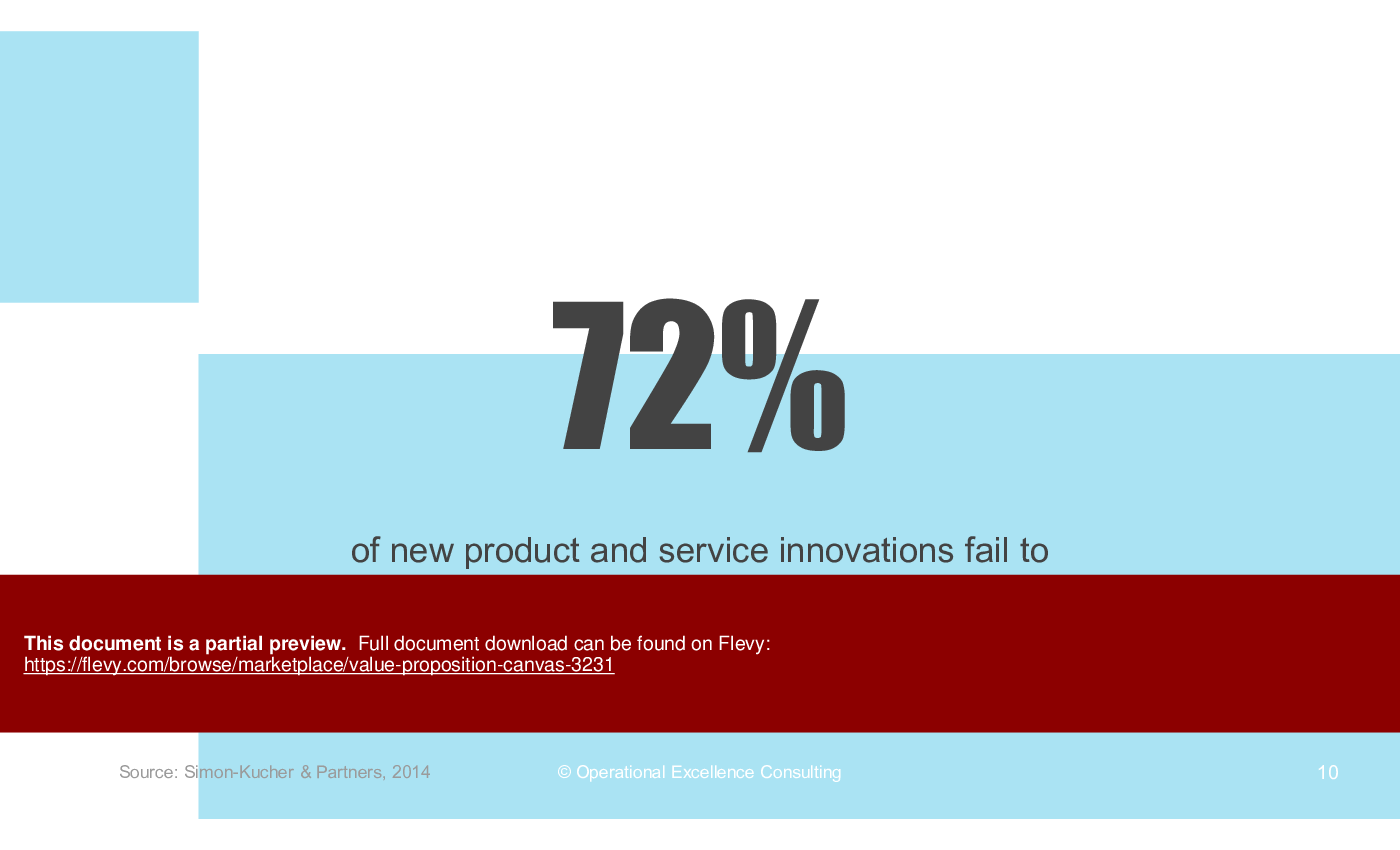
Yes, by aligning offerings with customer needs and expectations, the Value Proposition Canvas can significantly reduce the risk of product failures.
What industries can benefit from using the Value Proposition Canvas?
Any industry focused on customer-centric design, including technology, healthcare, retail, and services, can benefit from this framework.
How often should the Value Proposition Canvas be revisited?
It should be revisited regularly, especially during product development cycles, to ensure ongoing alignment with evolving customer needs.
What resources are available for further learning?
Users are encouraged to explore additional resources on the Strategyzer website, including tools and templates related to the Value Proposition Canvas.
Glossary
• Value Proposition - The benefits customers can expect from a product or service.
• Customer Profile - A detailed description of a specific customer segment, including their jobs, pains, and gains.
• Value Map - A visual representation of how products and services alleviate customer pains and create gains.
• Design Thinking - An approach to problem-solving that emphasizes human-centered design and iterative processes.
• Fit - The alignment between a value proposition and customer needs, ensuring that the offering effectively addresses customer jobs, pains, and gains.
• Pain Relievers - Features of a product or service that alleviate customer pains.
• Gain Creators - Features of a product or service that create customer gains.
• Customer Jobs - The tasks or problems customers are trying to solve.
• Customer Gains - The benefits or outcomes customers desire from a product or service.
• Customer Pains - The obstacles or challenges customers face when trying to complete a job.
• Ad-lib Template - A structured format for crafting concise value propositions.
• Iterative Process - A cyclical approach to design and testing that emphasizes continuous improvement.
• Collaborative Problem-Solving - Working as a team to address challenges and develop solutions.
• Market Fit - The degree to which a product satisfies the needs of a target market.
• Customer-Centric Approach - A strategy that prioritizes the needs and preferences of customers in product development.
• Feedback Loop - A process for gathering customer insights to inform ongoing product development.
• Innovation - The process of creating new ideas or products that provide value to customers.
• Business Model Canvas - A strategic management tool for developing new business models or documenting existing ones.
• Environmental Map - A framework for analyzing the external factors that impact a business.
• Workshops - Collaborative sessions designed to facilitate learning and problem-solving among participants.
Source: Best Practices in Value Proposition PowerPoint Slides: Value Proposition Canvas PowerPoint (PPTX) Presentation Slide Deck, Operational Excellence Consulting
This document is available as part of the following discounted bundle(s):
Save %!
Value Innovation Toolkit
This bundle contains 2 total documents. See all the documents to the right.
Save %!
Business Model Innovation Toolkit
This bundle contains 2 total documents. See all the documents to the right.
Save %!
Business Model Design & Innovation Toolkit
This bundle contains 3 total documents. See all the documents to the right.
Save %!
Innovation & Strategy Toolkit
This bundle contains 4 total documents. See all the documents to the right.
Save %!
Complete Service Design & Innovation Toolkit
This bundle contains 5 total documents. See all the documents to the right.
|
Download our FREE Strategy & Transformation Framework Templates
Download our free compilation of 50+ Strategy & Transformation slides and templates. Frameworks include McKinsey 7-S, Balanced Scorecard, Disruptive Innovation, BCG Curve, and many more. |